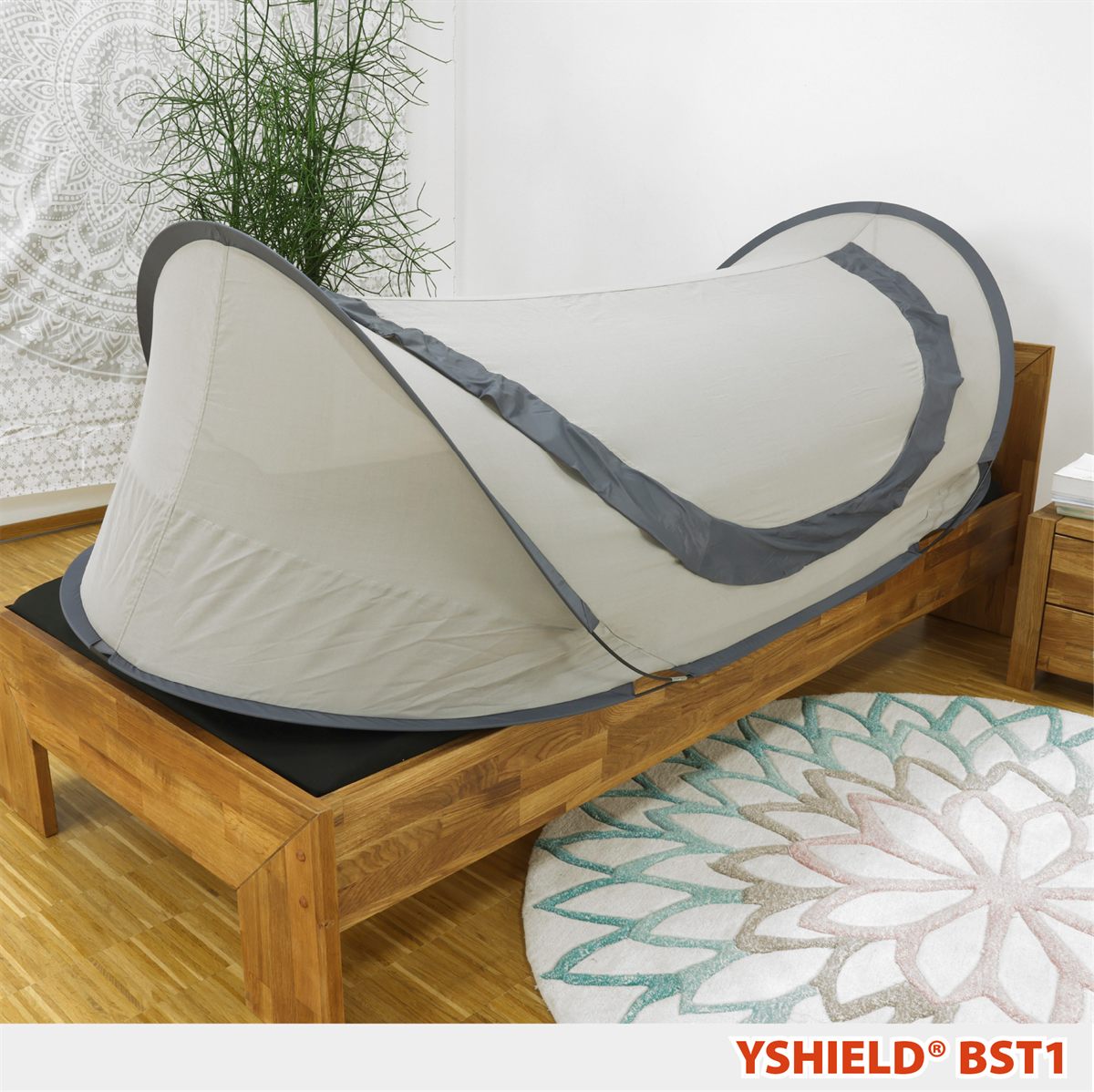
SAFECAVE BST1 Pop-Up Sleeping Tent
HF+LFPortable
Pop-up shielding tent that sets up in seconds; portable protection when travelling or staying away from home.
- Attenuation: 44 dB
- Size: 95 × 210 × 55 cm
- Setup: Pop-up, no hanging

An honest framework for people living with EHS: what science says, what it cannot yet say, and the practical steps that help.
Electromagnetic hypersensitivity is a condition in which symptoms such as headaches, sleep disturbance, palpitations, difficulty concentrating and burning skin are attributed to electromagnetic sources. The World Health Organization acknowledges that the symptoms are real and can seriously affect the person; in blinded tests, however, a consistent causal link between the symptoms and field exposure has not been demonstrated to date.
These two sentences are true together, and they form the basis of an honest framework: your complaint is real; its mechanism is not scientifically clear. Because the symptoms can also stem from other medical causes, a doctor's evaluation is always the first step.
While the causality debate continues, a significant proportion of affected people report feeling better in low-field environments. Exposure reduction is a harmless, measurable and reversible strategy; it is not a medicine and carries no promise of treatment.
The strategy is always built in the same order: first source management (your own devices), then protecting the place where the most time is spent — the bed — and structural shielding last.
Shielding products lower the field level in your environment; they cannot promise to lower your symptoms. Our experience is that the greatest benefit comes from projects that focus on the sleeping area, are verified by measurement and proceed step by step. We help you take every product decision within this honest framework.
In most countries it is not a disease with its own diagnostic code; the symptom cluster is handled under 'idiopathic environmental intolerance'. Some countries have administrative recognition in the context of disability or accommodation.
In practice the goal is not 'zero' but getting down to building-biology guideline values. With the right project, levels below 0.1-1 µW/m² in the sleeping area are achievable at most locations.
Where you spend the longest time: the bed. A canopy plus floor mat combination gives the highest impact without renovation; the rest is planned according to the measurement results.
Pop-up shielding tent that sets up in seconds; portable protection when travelling or staying away from home.
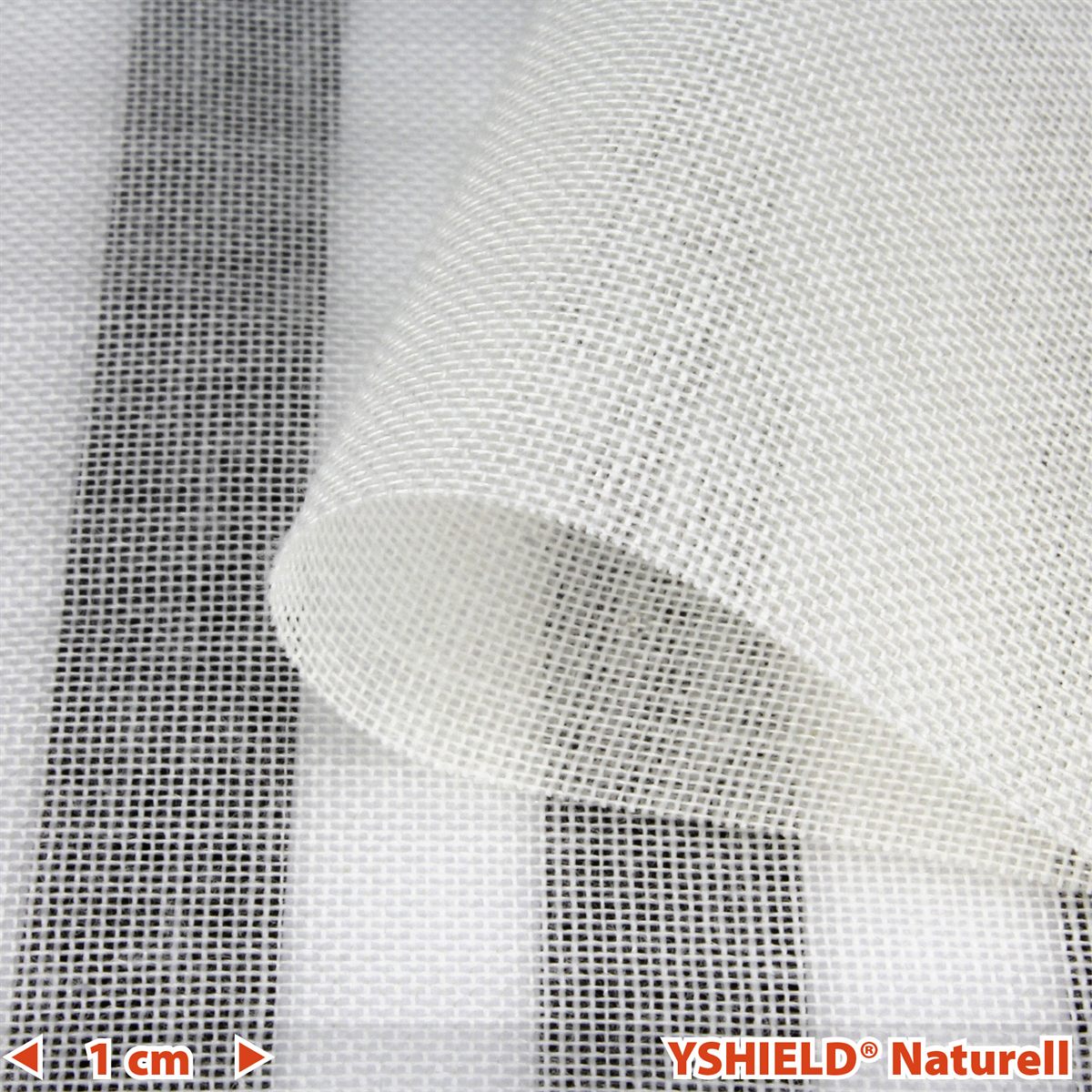
Our best-selling fabric: a semi-transparent cotton weave (82% cotton, 17% copper, 1% silver — 70 g/m²). Ökotex 100+1000 certified; the standard choice for curtains and canopies.
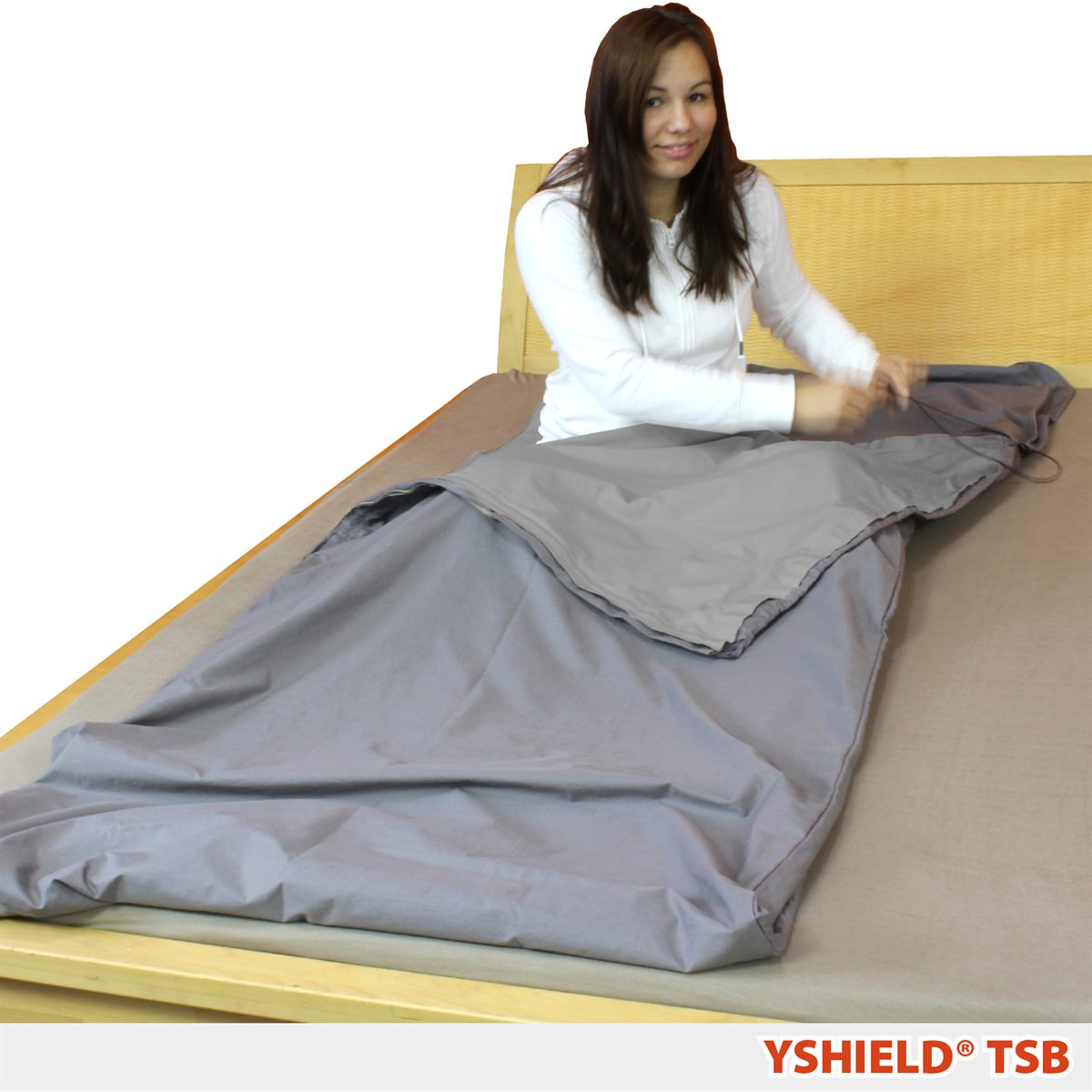
Sleeping bag in STEEL-GRAY fabric; with its removable cotton inner liner and silver-plated zipper, it offers all-round protection when travelling.
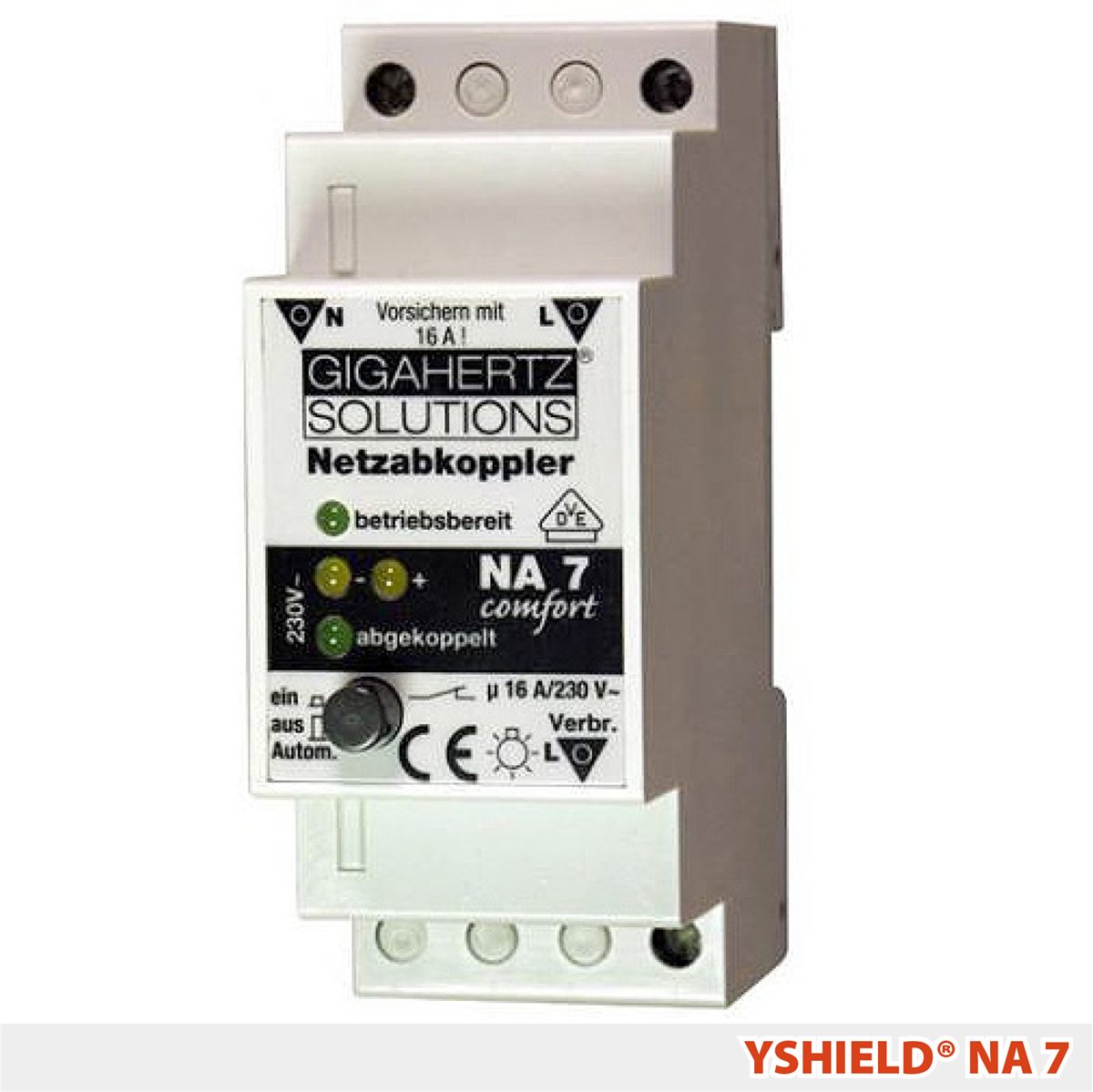
VDE-marked demand switch that automatically de-energises the 230 V line when there is no consumption on the circuit and re-energises it instantly when a load is detected; installed in the fuse box.
Talk to our technical team about quantity calculations, product combinations and application details — the site survey is free of charge.